Как работает provably fair в Keno
Вот как играть в Keno на Cloudbet и как проверить, что каждый розыгрыш является provably fair.
Как играть в Keno
Keno — это игра с розыгрышем чисел: вы выбираете набор чисел на игровом поле, затем игра разыгрывает свой собственный набор чисел. Чем больше ваших выбранных чисел совпадает с разыгранными, тем больше выигрыш — насколько больше, зависит от того, сколько чисел вы выбрали изначально. После того как вы выбрали числа и сделали ставку, происходит розыгрыш, и все совпадения показываются мгновенно.
Cloudbet Originals Keno
Собственная игра Cloudbet Originals Keno использует игровое поле из 40 чисел: вы выбираете от 1 до 10 чисел, а игра разыгрывает 10. RTP составляет 99 %, ставки принимаются от $0.01. Чем меньше чисел вы выбрали, тем выше волатильность и крупнее выплата за попадание; чем больше чисел выбрано, тем чаще выигрыши, но ниже выплата за попадание. Доступна функция Auto Bet для автоматизации серии раундов.
Розыгрыш в Keno формируется тем же проверяемым способом, что и в любой другой игре Cloudbet Original — подробнее о том, как Server Seed, Client Seed и Nonce объединяются в Round Signature, а затем в последовательность случайных чисел через SHAKE256, смотрите в нашем обзоре provably fair. Эта страница описывает то, что специфично именно для Keno: как эта последовательность случайных чисел превращается в фактический набор разыгранных чисел.
Как случайные числа превращаются в розыгрыш Keno
Игровое поле Keno пронумеровано от 1 до 40. Десять из этих 40 чисел должны быть разыграны по одному, без повторения какого-либо числа.

Количество ещё не разыгранных чисел мы называем P. P начинается со значения 40 и уменьшается на 1 после каждого розыгрыша числа.
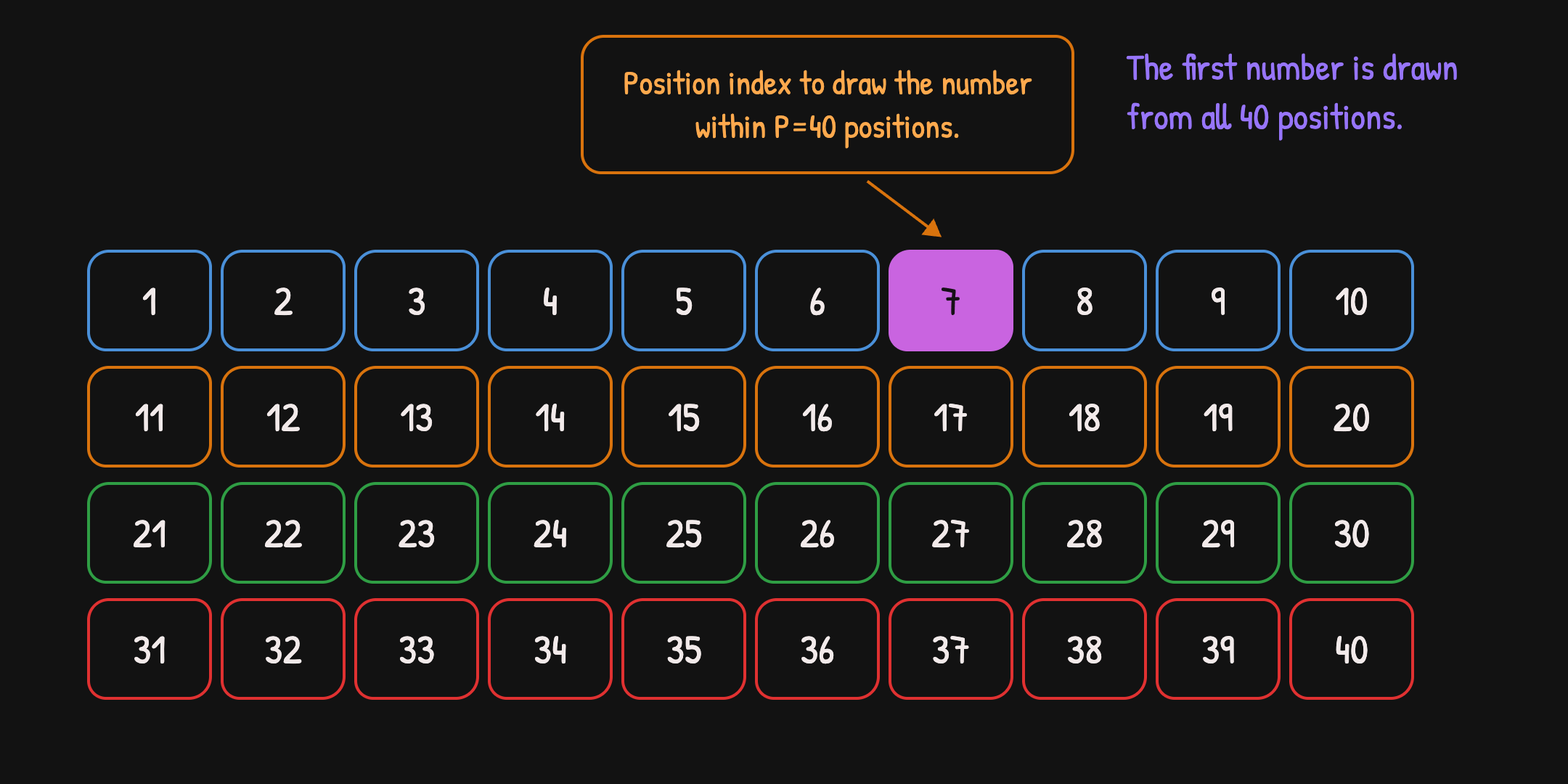
Для каждого из 10 розыгрышей из вывода SHAKE256 берётся случайное 4-байтовое (32-битное) число в диапазоне от 0 до 4 294 967 295. Чтобы честно выбрать среди оставшихся P чисел, мы применяем rejection sampling (см. наше руководство по rejection sampling), а затем берём результат по модулю P, чтобы получить позицию следующего разыгранного числа. Если нужно разыграть ещё числа, выбранное число удаляется из пула, P уменьшается на 1, и процесс повторяется.
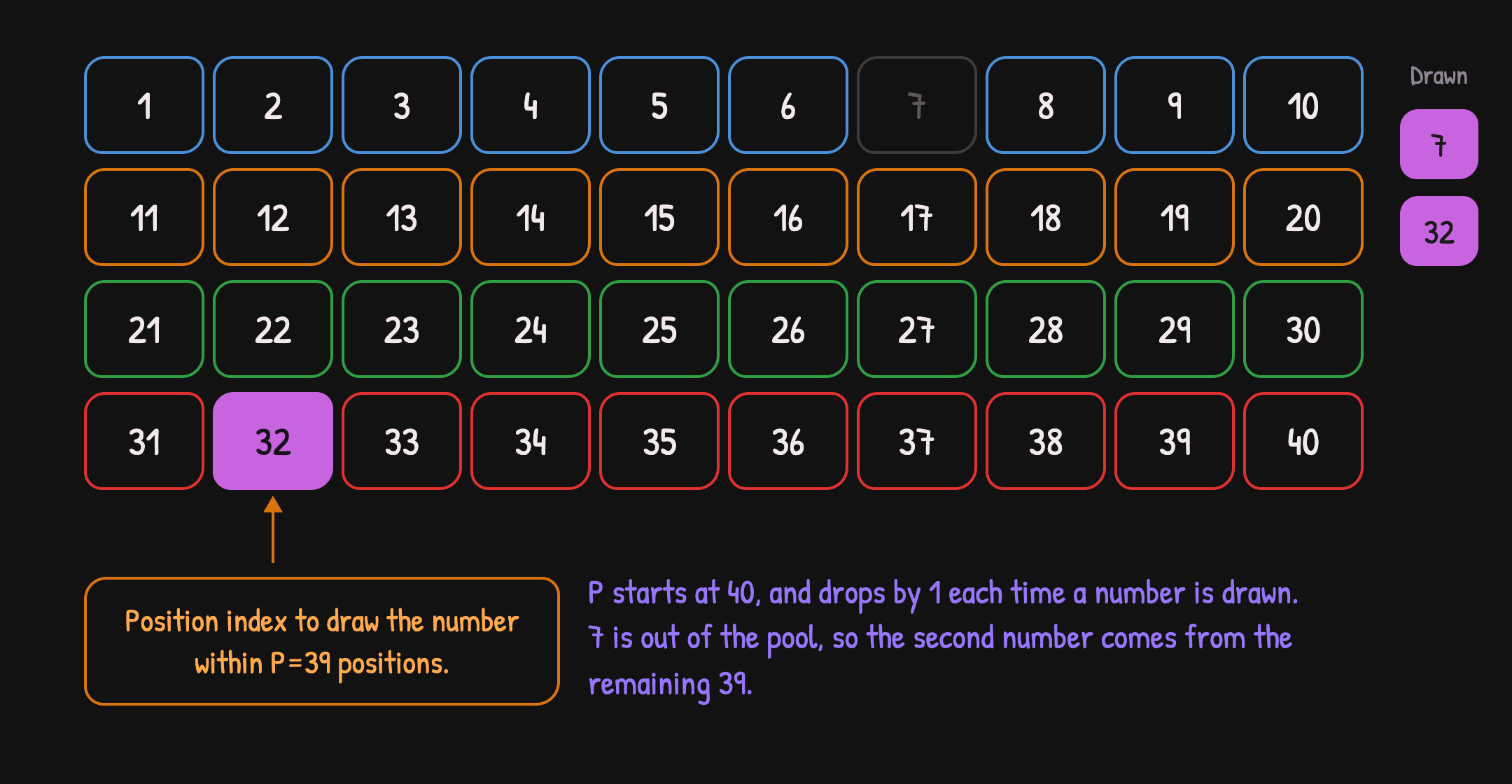
Это продолжается, пока не будут разыграны все 10 чисел.


Игровой процесс
Полный набор из 10 разыгранных чисел формируется и скрывается на сервере до того, как вы сделаете свой выбор, — после этого его нельзя незаметно изменить благодаря Commitment, уже переданному вам. Ваш выбор просто сверяется с этим заранее сформированным набором по завершении раунда, а выигрыш рассчитывается по количеству совпадений.
Код для независимой проверки результатов Keno на Cloudbet
Введите свои Server Seed, Client Seed и Nonce, чтобы проверить собственные результаты. Установите единственную зависимость и запустите код самостоятельно, чтобы воспроизвести результат своей игры.
Примечание: чтобы раскрыть Server Seed завершённой игры на Cloudbet, вы должны уже начать новый раунд (это переключает игру на новую пару seed).
Dependencies:
npm install js-sha3
The code:
// If you are running this yourself, then you can input your own data here
// You can then compare:
// 1) Cloudbet's provided Commitment to the Commitment outputted here. This proves that the Server Seed was not altered during gameplay.
// 2) Cloudbet's provided mine positions to the mine positions outputted here. This proves that your game's outcome was determined solely by the pre-game seeds and was not altered afterwards.
let myServerSeed      = 'your_server_seed'; // ✍️YOUR_INPUT✍️: Enter your (unhashed) Server Seed here
let myClientSeed      = 'your_client_seed'; // ✍️YOUR_INPUT✍️: Enter your Client Seed here
let myNonce           = 1;                  // ✍️YOUR_INPUT✍️: Enter your Nonce here
const usingCustomData = false;              // Change this to true if you are using your own data

// Load libraries
const crypto = require('crypto');
const { sha3_256, shake256 } = require('js-sha3');

// Step 1: Generate a Server Seed and Commitment
// And generate a Client Seed - either by player input or by the player's browser
function generateServerSeed() {
  let seed = crypto.randomBytes(32).toString('hex');
  if (usingCustomData) { seed = myServerSeed; }
  const commitment = sha3_256(seed);
  return { 'serverSeed': seed, 'commitment': commitment };
}
function getClientSeed() {
  let seed = crypto.randomBytes(32).toString('hex');
  if (usingCustomData) { seed = myClientSeed; }
  return seed;
}

// Step 2: Create a Round Signature with SHA3 using a Server Seed, Client Seed and Nonce
function createRoundSignature(serverSeed, clientSeed, nonce) {
  return sha3_256(`${serverSeed}:${clientSeed}:${nonce}`);
}

// Step 3: Create a SHAKE256 stream generator from a Round Signature.
// To simplify this example program, this function doesn't create a stream, but instead a sequence of custom length.
function* createRandomNumberSequence(numbersToGenerate, roundSignature) {
  const numOfBytes = 4 * numbersToGenerate;           // 4 bytes (32 bits) per random number we generate
  const byteStream = shake256.create(8 * numOfBytes); // shake takes bits as input
  byteStream.update(roundSignature);                  // Use the Round Signature to seed the generator
  const buf = Buffer.from(byteStream.digest());       // The Buffer class lets us package every 4 bytes into one 32-bit integer
  for (let i = 0; i < numbersToGenerate; i++) {
    yield buf.readUInt32BE(i * 4);                    // Read buf in 4-byte steps
  }
}

// Step 4: Pick a number of unique positions
function pickUniquePositions(numOfPicks, totalPositions, rng) {
  const available = Array.from({ length: totalPositions }, (_, i) => i);
  const picks = [];

  for (let i = 0; i < numOfPicks; ++i) {
    const index = sample(available.length, rng);

    picks.push(available[index]);
    available.splice(index, 1); // Remove chosen pump from list of non-faulty pumps
  }
  return picks;
}
// Rejection sampling for fair results
function sample(P, rng) {
  const maxAcceptable = Math.floor(0x100000000 / P) * P;

  // Rejection sampling
  let rand;
  do {
    rand = rng.next().value;
  } while (rand >= maxAcceptable);
  // Modulo operation
  const sampled_number = rand % P;

  return sampled_number;
}

// Example usage
(function main() {
  let nonce = 1;
  if (usingCustomData) { nonce = myNonce; }
  const numOfHits = 10;
  const totalPositions = 40;

  const { serverSeed, commitment } = generateServerSeed();
  const clientSeed = getClientSeed();

  const roundSignature = createRoundSignature(serverSeed, clientSeed, nonce);
  const numbersToGenerate = totalPositions * 2; // We need at least one random number per position, but there is an improbable possibility  we'll need two
  const rng = createRandomNumberSequence(numbersToGenerate, roundSignature);

  let hits = pickUniquePositions(numOfHits, totalPositions, rng);
  hits = hits.map((value)=> value + 1 );
  hits.sort((a, b)=>a-b);

  console.log('📝 Commitment (shown before the game):', commitment);
  console.log('🔒 Server Seed (revealed after the game):', serverSeed);
  console.log('🎲 Client Seed:', clientSeed);
  console.log('🔢 Nonce:', nonce);
  console.log('🔁 Round Signature (can be verified after the game):', roundSignature);
  console.log(`🎯 Hits:`, hits);
})();