Jak działa provably fair w Keno
Oto jak grać w Keno na Cloudbet oraz jak sprawdzić, że każde losowanie jest provably fair.
Jak grać w Keno
Keno to gra polegająca na losowaniu liczb: wybierasz zestaw liczb na planszy, a następnie gra losuje własny zestaw liczb. Im więcej Twoich typów trafi w wylosowane liczby, tym wyższa wygrana — a to, o ile wyższa, zależy od liczby typów wybranych na początku. Po wybraniu liczb i postawieniu zakładu losowanie odbywa się natychmiast, a wszelkie trafienia są od razu widoczne.
Cloudbet Originals Keno
Własna gra Cloudbet z serii Originals — Keno — wykorzystuje planszę z 40 liczbami: wybierasz od 1 do 10 liczb, a gra losuje 10. RTP wynosi 99%, a zakłady można stawiać już od $0.01. Im mniej liczb wybierzesz, tym wyższa zmienność i większe wygrane za trafienie; im więcej liczb wybierzesz, tym częstsze wygrane, ale niższe zwroty za trafienie. Dostępna jest funkcja Auto Bet, która automatyzuje serię rund.
Losowanie w Keno jest generowane w ten sam, możliwy do zweryfikowania sposób co w każdej innej grze Cloudbet Originals — zobacz nasz przegląd systemu provably fair, aby dowiedzieć się, jak Server Seed, Client Seed i Nonce łączą się w Round Signature, a następnie w ciąg liczb losowych generowany przez SHAKE256. Ta strona opisuje to, co jest specyficzne dla Keno: w jaki sposób ten ciąg liczb losowych zamienia się w rzeczywisty zestaw wylosowanych liczb.
Jak liczby losowe zamieniają się w losowanie Keno
Plansza Keno jest ponumerowana od 1 do 40. Spośród tych 40 liczb trzeba wylosować dziesięć, pojedynczo, bez powtórzeń.

Liczbę jeszcze niewylosowanych liczb nazywamy P. P zaczyna się od 40 i zmniejsza się o 1 za każdym razem, gdy zostanie wylosowana kolejna liczba.
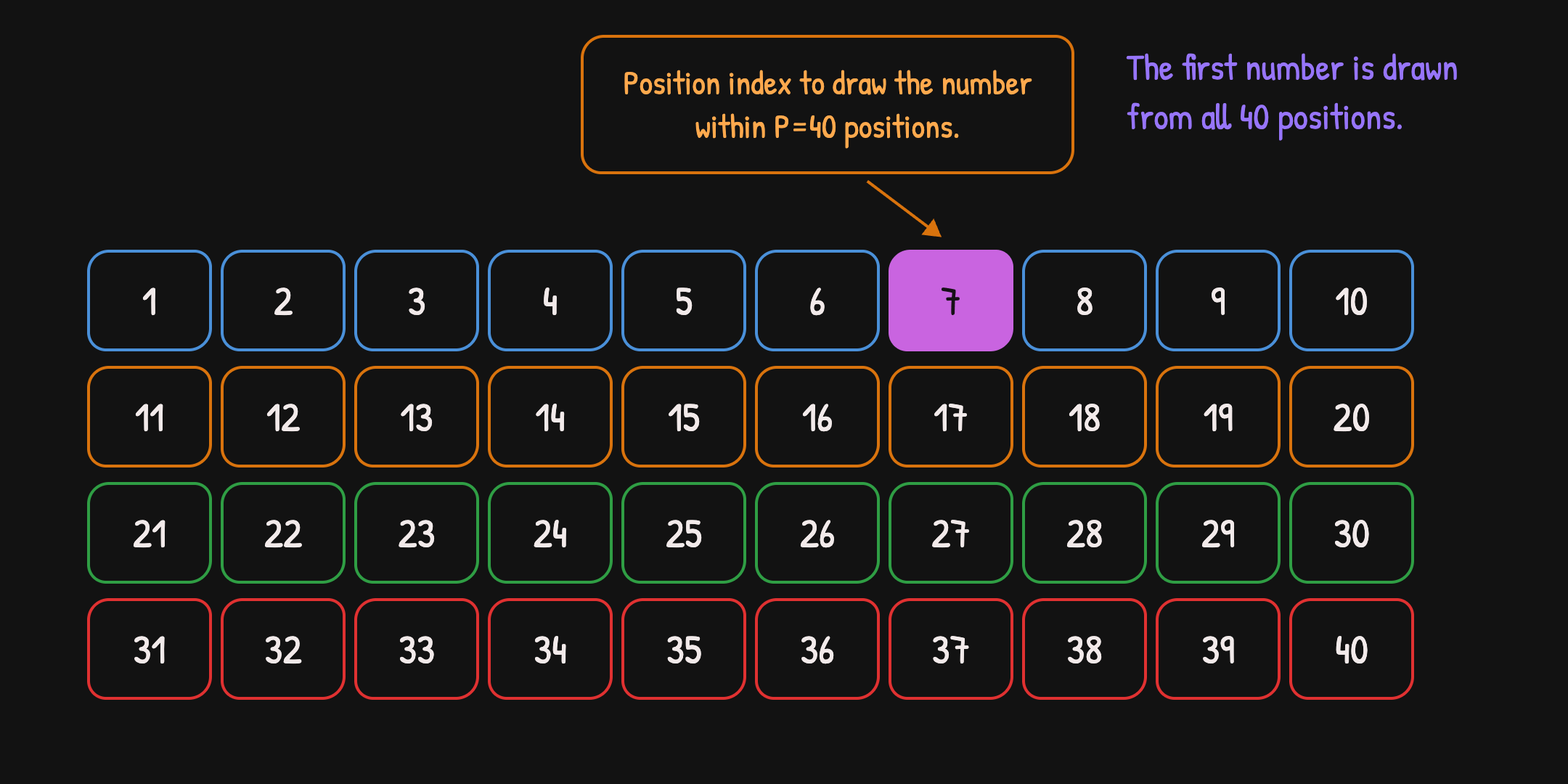
Dla każdego z 10 losowań z wyniku SHAKE256 pobierana jest losowa liczba o długości 4 bajtów (32 bitów), z zakresu od 0 do 4,294,967,295. Aby wybrać liczbę sprawiedliwie spośród pozostałych P liczb, stosujemy próbkowanie odrzucające (zobacz nasz przewodnik po próbkowaniu odrzucającym), a następnie wyznaczamy resztę z dzielenia wyniku przez P, aby uzyskać pozycję kolejnej wylosowanej liczby. Jeśli trzeba jeszcze wylosować kolejne liczby, wybrana liczba jest usuwana z puli, P zmniejsza się o 1, a cały proces się powtarza.
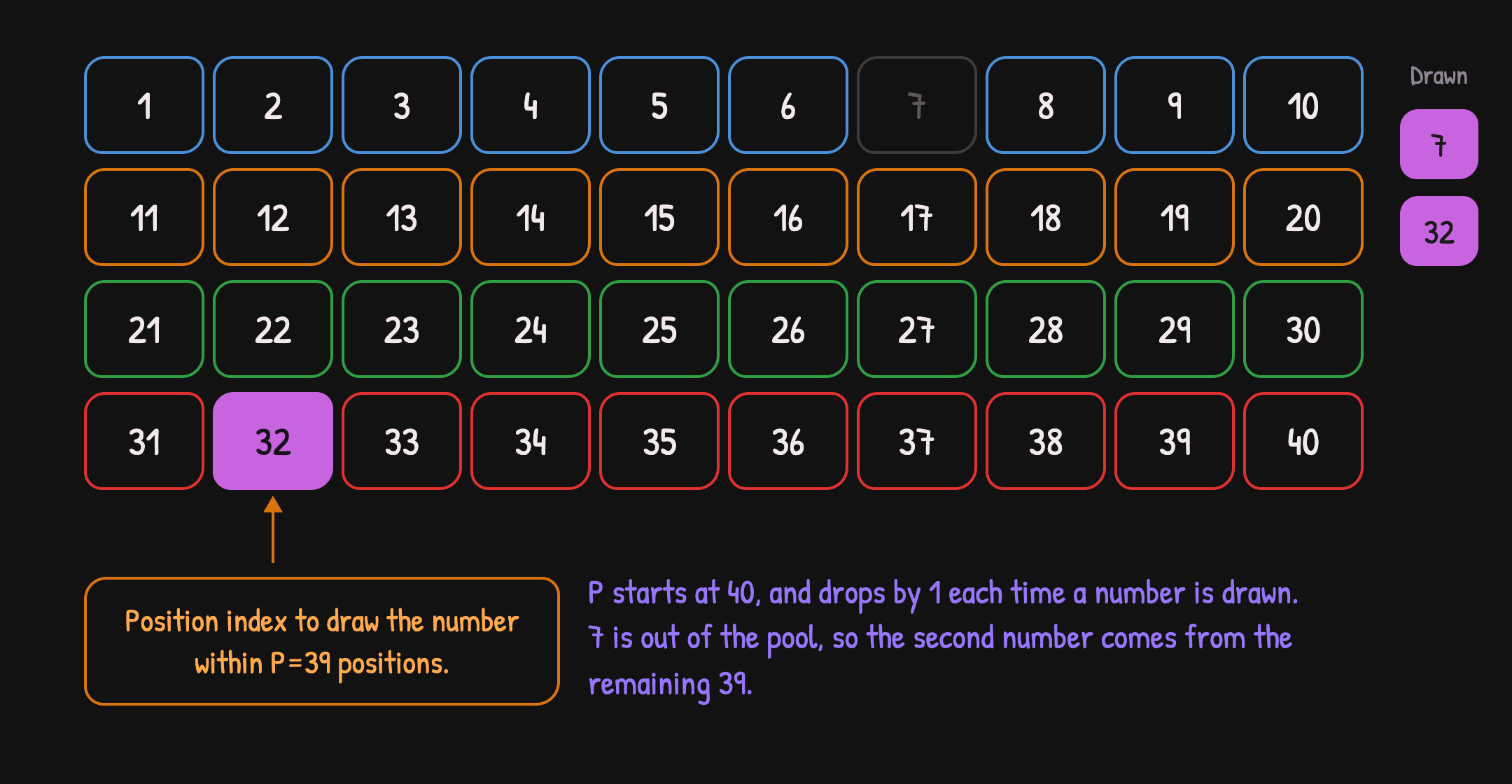
Proces trwa, dopóki nie zostanie wylosowanych wszystkich 10 liczb.


Rozgrywka
Pełny zestaw 10 wylosowanych liczb jest generowany i ukrywany na serwerze, zanim dokonasz swoich wyborów — dzięki Commitment udostępnionemu Ci wcześniej nie da się go później zmienić bez wykrycia. Twoje typy są po prostu porównywane z tym wcześniej wylosowanym zestawem po zakończeniu rundy, a wygrana jest obliczana na podstawie liczby trafień.
Kod do samodzielnej weryfikacji Twoich wyników Keno na Cloudbet
Wprowadź swój Server Seed, Client Seed i Nonce, aby zweryfikować własne wyniki. Zainstaluj jedyną wymaganą zależność i uruchom kod samodzielnie, aby odtworzyć wynik swojej gry.
Uwaga: aby ujawnić Server Seed z zakończonej gry na Cloudbet, musisz już rozpocząć nową rundę (co powoduje zmianę na nową parę seedów).
Zależności:
npm install js-sha3
Kod:
// If you are running this yourself, then you can input your own data here
// You can then compare:
// 1) Cloudbet's provided Commitment to the Commitment outputted here. This proves that the Server Seed was not altered during gameplay.
// 2) Cloudbet's provided mine positions to the mine positions outputted here. This proves that your game's outcome was determined solely by the pre-game seeds and was not altered afterwards.
let myServerSeed      = 'your_server_seed'; // ✍️YOUR_INPUT✍️: Enter your (unhashed) Server Seed here
let myClientSeed      = 'your_client_seed'; // ✍️YOUR_INPUT✍️: Enter your Client Seed here
let myNonce           = 1;                  // ✍️YOUR_INPUT✍️: Enter your Nonce here
const usingCustomData = false;              // Change this to true if you are using your own data

// Load libraries
const crypto = require('crypto');
const { sha3_256, shake256 } = require('js-sha3');

// Step 1: Generate a Server Seed and Commitment
// And generate a Client Seed - either by player input or by the player's browser
function generateServerSeed() {
  let seed = crypto.randomBytes(32).toString('hex');
  if (usingCustomData) { seed = myServerSeed; }
  const commitment = sha3_256(seed);
  return { 'serverSeed': seed, 'commitment': commitment };
}
function getClientSeed() {
  let seed = crypto.randomBytes(32).toString('hex');
  if (usingCustomData) { seed = myClientSeed; }
  return seed;
}

// Step 2: Create a Round Signature with SHA3 using a Server Seed, Client Seed and Nonce
function createRoundSignature(serverSeed, clientSeed, nonce) {
  return sha3_256(`${serverSeed}:${clientSeed}:${nonce}`);
}

// Step 3: Create a SHAKE256 stream generator from a Round Signature.
// To simplify this example program, this function doesn't create a stream, but instead a sequence of custom length.
function* createRandomNumberSequence(numbersToGenerate, roundSignature) {
  const numOfBytes = 4 * numbersToGenerate;           // 4 bytes (32 bits) per random number we generate
  const byteStream = shake256.create(8 * numOfBytes); // shake takes bits as input
  byteStream.update(roundSignature);                  // Use the Round Signature to seed the generator
  const buf = Buffer.from(byteStream.digest());       // The Buffer class lets us package every 4 bytes into one 32-bit integer
  for (let i = 0; i < numbersToGenerate; i++) {
    yield buf.readUInt32BE(i * 4);                    // Read buf in 4-byte steps
  }
}

// Step 4: Pick a number of unique positions
function pickUniquePositions(numOfPicks, totalPositions, rng) {
  const available = Array.from({ length: totalPositions }, (_, i) => i);
  const picks = [];

  for (let i = 0; i < numOfPicks; ++i) {
    const index = sample(available.length, rng);

    picks.push(available[index]);
    available.splice(index, 1); // Remove chosen pump from list of non-faulty pumps
  }
  return picks;
}
// Rejection sampling for fair results
function sample(P, rng) {
  const maxAcceptable = Math.floor(0x100000000 / P) * P;

  // Rejection sampling
  let rand;
  do {
    rand = rng.next().value;
  } while (rand >= maxAcceptable);
  // Modulo operation
  const sampled_number = rand % P;

  return sampled_number;
}

// Example usage
(function main() {
  let nonce = 1;
  if (usingCustomData) { nonce = myNonce; }
  const numOfHits = 10;
  const totalPositions = 40;

  const { serverSeed, commitment } = generateServerSeed();
  const clientSeed = getClientSeed();

  const roundSignature = createRoundSignature(serverSeed, clientSeed, nonce);
  const numbersToGenerate = totalPositions * 2; // We need at least one random number per position, but there is an improbable possibility  we'll need two
  const rng = createRandomNumberSequence(numbersToGenerate, roundSignature);

  let hits = pickUniquePositions(numOfHits, totalPositions, rng);
  hits = hits.map((value)=> value + 1 );
  hits.sort((a, b)=>a-b);

  console.log('📝 Commitment (shown before the game):', commitment);
  console.log('🔒 Server Seed (revealed after the game):', serverSeed);
  console.log('🎲 Client Seed:', clientSeed);
  console.log('🔢 Nonce:', nonce);
  console.log('🔁 Round Signature (can be verified after the game):', roundSignature);
  console.log(`🎯 Hits:`, hits);
})();