Who is this for?
You know how to read a pre-match line. You understand how Bo3 formats reduce volatility. You’ve learned how draft shapes tempo. The next step is learning how to interpret the game as it unfolds and how live Dota betting odds react to that information.
Live betting rewards preparation, discipline, and context awareness.
What you will learn
By the end of this module, you will understand:
- How dota 2 live betting markets react to gold swings
- Which in-game indicators carry real weight
- How Roshan and buybacks affect live pricing
- When to adjust kill and duration positions
- When hedging improves long-term decision making
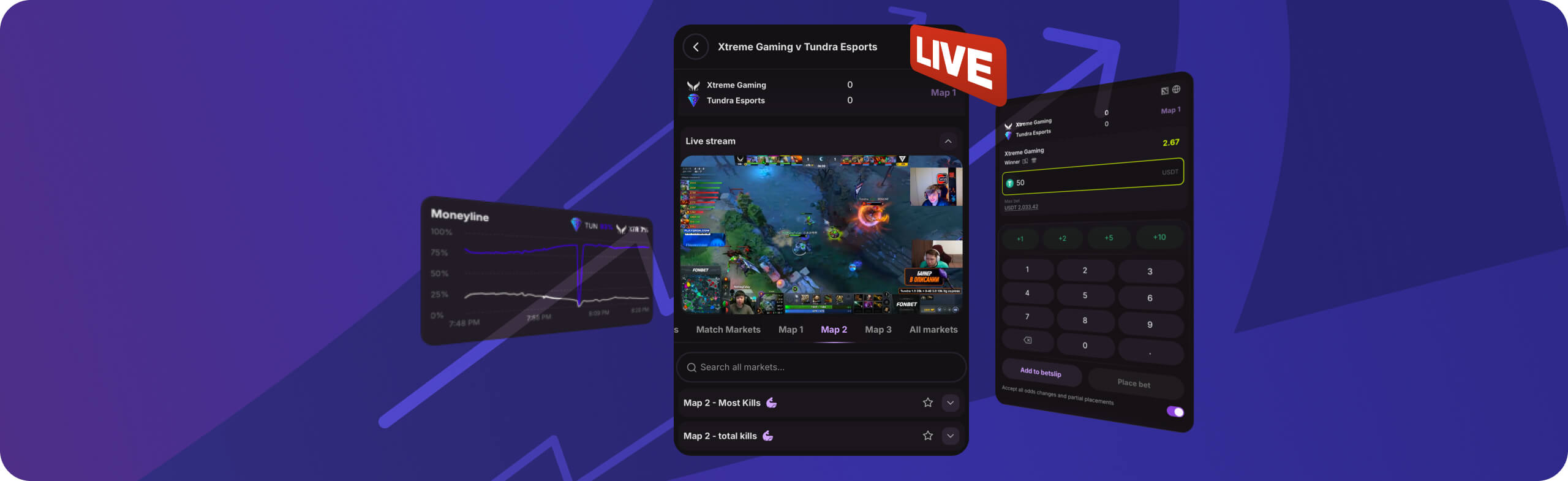
- How to use a dota 2 betting app effectively during tournaments
Contents
- 1 Introduction: Why live Dota requires structure
- 2 The live indicators that matter most
- 3 How live markets typically react
- 4 Live Kill Totals: Reading Engagement Pace
- 5 Hedging during live play
- 6 Using a Dota 2 betting app effectively
- 7 Myth: Live betting is just chaos
- 8 Applying structure to live momentum
Introduction: Why live Dota requires structure
Dota 2 matches stretch and compress over time. A team can fall behind early and still win comfortably 20 minutes later. A dominant early start can stall after one failed high-ground push.
Live markets move constantly because the game state is constantly evolving. The challenge is determining which shifts are temporary and which alter the win condition.
Live betting becomes structured when you focus on:
- Net worth distribution
- Objective control
- Buyback economy
- Item timing spikes
- Draft scaling windows
When these elements align, momentum becomes measurable.
The live indicators that matter most
Scoreboards can be misleading. Kill count alone rarely explains who controls the map.
The indicators below consistently influence live dota betting odds.
1. Net Worth in Context
A 6,000 gold lead at 15 minutes carries different implications than a 6,000 gold lead at 35 minutes.
Early leads often come from lane dominance or tempo heroes. Later leads usually reflect map control and objective pressure.
Before reacting to a gold swing, consider:
- Who controls Roshan vision?
- Are tier 2 towers still standing?
- Which cores are approaching key item spikes?
- Does the trailing team scale harder?
For example, when Gaimin Gladiators draft tempo cores like Pangolier or Beastmaster, early gold leads often convert into tower pressure quickly. When Team Spirit draft Yatoro on late-game carries such as Terrorblade or Medusa, small early deficits are often manageable because the lineup peaks later.
Gold matters. Timing determines how much.
2. Teamfights and conversion
Winning a fight does not automatically change the map.
After a teamfight, assess what follows:
- Were buybacks forced?
- Was Roshan taken?
- Were outer towers removed?
- Was high ground pressured?
At The International 2023, Team Spirit frequently won late-game fights and immediately converted them into Roshan control and map restriction. Those moments caused live odds to tighten sharply because the win condition had shifted.
Markets respond quickly to kill count. Objective conversion carries more structural weight.
3. Roshan Control
Roshan remains the single most influential mid-game pivot.
Aegis changes how teams approach high ground. It changes how aggressively they posture. It changes how defenders must allocate buybacks.
During ESL Challenger China (January–February 2026), Xtreme Gaming demonstrated consistent mid-game control in their finals run. Early maps were competitive in net worth, but once Roshan control shifted in Xtreme’s favor, they accelerated into objective dominance.
Live markets reacted after Roshan fights resolved. Recognizing which team had better Roshan setup before the fight occurred provided earlier entry points.
Roshan timing often marks the moment when volatility narrows.
How live markets typically react
The table below outlines common in-game shifts and how markets can respond.
| Indicator | Structural Meaning | Market Reaction | What to Evaluate |
| Early 4–6k gold lead | Lane or tempo advantage | Moneyline shortens | Does the draft close early? |
| Roshan secured | High-ground window opens | Odds tighten | Are buybacks available? |
| Back-to-back fights won | Momentum swing | Kill totals rise | Were objectives taken? |
| Late-game carry item spike | Power timing reached | Underdog price shortens | Can the spike be defended? |
| High-ground defense holds | Game length extends | Duration lines rise | Does scaling favor defenders? |
Markets move fast. Understanding why they move gives you time to evaluate rather than react.
Live Kill Totals: Reading Engagement Pace
Dota 2 live prop bets often center on total kills because kill pace is visible and emotionally impactful.
High early kill counts push over lines upward quickly. Sustained engagement frequency is what matters.
When evaluating live kill markets, consider:
- Are fights occurring around objectives?
- Are both teams grouping frequently?
- Have defensive items like BKB come online?
- Is map control forcing repeated skirmishes?
During the PGL Wallachia Season 7 Asia Qualifier, several series regularly exceeded 45–50 total kills due to aggressive drafts and repeated mid-game engagements. Engagement structure drove totals higher over multiple maps.
Kill volume reflects how the game is being played, not just how chaotic it looks.
Hedging during live play
Hedging means placing a second bet during the match to reduce risk or lock in profit on your original position.
For example, imagine you backed Team Liquid pre-match at 2.20. At 20 minutes, they take a 5,000 gold lead and their live price drops to 1.40. You could:
- Do nothing and let the original bet run.
- Place a smaller bet on the opponent at the new live price to secure partial profit regardless of the outcome.
Hedging changes your exposure. It reshapes the payout structure of your position while the game is still being played.
The decision to hedge should be based on structural shifts, not nerves. Hedging might be a good idea when:
- A pre-match tempo read has clearly failed and the draft no longer controls the map.
- A scaling lineup reaches its key item window earlier than expected.
- Buybacks flip what appears to be a gold advantage.
- Roshan control changes decisively and opens high-ground pressure.
Hedging reduces long-term returns when it is driven by emotional swings rather than game-state shifts.
A single lost fight does not invalidate a read.
A shift in scaling advantage, buyback economy, or objective control can.
Live betting gives you flexibility. Hedging is how you use that flexibility responsibly.
Using a Dota 2 betting app effectively
Live betting speed matters, but preparation matters more.
Before the game begins, identify potential live angles based on draft and scaling. If a lineup features early push and tempo heroes, you may anticipate early tower and Roshan pressure. If both teams draft late-game cores, duration and comeback potential increase.
During the match:
- Track Roshan respawn timing because it signals the next major pivot.
- Monitor buyback status in late game since it determines whether fights end the map.
- Watch item timing spikes such as Black King Bar, Blink Dagger, or Refresher Orb completions, which often precede decisive engagements.
- Observe whether gold leads convert into objectives. Unconverted gold keeps volatility alive.
Prepared bettors act decisively because they already know what conditions justify action.
Myth: Live betting is just chaos
Some bettors assume live Dota betting is unpredictable because fights break out constantly and leads swing rapidly.
Game volatility follows structure. Draft scaling, Roshan control, buyback economy, and item timing determine whether a lead stabilizes or dissolves.
During ESL Challenger China, Xtreme Gaming repeatedly converted mid-game Roshan control into map dominance. That pattern was visible before the final scoreboard confirmed it.
Live markets adjust quickly, but structural shifts often appear one step earlier.
Momentum in Dota can be measured through objective control and timing windows.
Applying structure to live momentum
Live betting builds on everything learned in the previous modules.
- Draft defines the win condition.
- Patch defines tempo expectations.
- Live play reveals whether those expectations are unfolding.
When gold converts into objectives, when Roshan aligns with scaling windows, and when buybacks reshape risk, the map becomes readable.
That is where Dota 2 live betting transitions from reactive clicks to structured decision making.
Next modules