Who is this for?
What you will learn
By the end of this module, you will understand:
- What main prop markets exist in Dota 2
- How to assess kill and objective pacing for dota 2 total kills betting
- When Roshan and tower destroys become value bets
- Strategies for item-based props like BKB timing
- How meta shifts and team styles affect prop probabilities
- How to apply props into a broader dota 2 betting strategy
Contents
- 1 Introduction: Why props are a different kind of bet
- 2 Common Dota 2 In-Game Prop Markets
- 3 Why prop markets matter
- 4 How to assess total kills and tempo
- 5 Item-based props: Signals from progression
- 6 Live betting and props
- 7 How to analyze props structurally
- 8 Myth: You Can’t Read Total Kills Markets
- 9 Applying Structure to In-Game Props
Introduction: Why props are a different kind of bet
Standard match bets answer “who wins?” Props answer how the match unfolds.
In Dota 2, objective control, fight outcomes, and item progression shape the tempo of the game. Props such as first Roshan, total towers destroyed, or even item timing markets like Black King Bar (BKB) over/under provide insight into mid-game dynamics and momentum shifts — often before the final result is decided.
Professional esports betting sites now offer a wide range of these granular markets, including first Roshan kills, total kills, and objective bets that appeal to bettors who understand how teams execute strategy and tempo.
Common Dota 2 In-Game Prop Markets
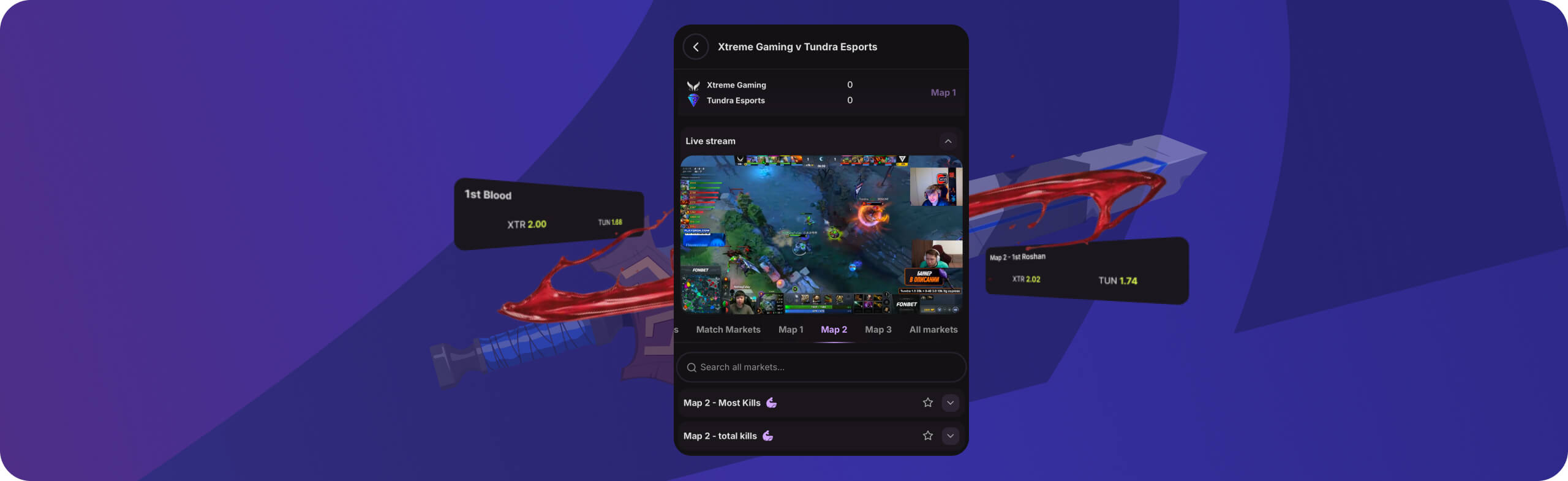
The most widely available in-game prop markets include:
| Prop Type | What You Are Betting On |
| First Blood | Which team secures the first hero kill of the map |
| First Tower | Which team destroys the first tower |
| First Roshan | Which team kills Roshan first |
| Total Kills (Over/Under) | Combined kills by both teams in a single map |
| Total Towers (Over/Under) | Total number of towers destroyed in the map |
| Item Timing Props | Completion timing of specific key items (e.g., BKB, Blink Dagger) |
Usually, the best dota 2 item betting sites list these alongside match markets, giving bettors options tied directly to objective progress and fight frequency.
Why prop markets matter
Props often move fast because they respond to in-game events, not just match flow. For example:
- Teams with strong early roaming cores often get First Blood and early Roshan advantages.
- Fight-heavy drafts increase the frequency of engagements, pushing total kills over lines set by the book.
- Pushing lineups that prioritize objectives like towers — or take early Roshan — can turn tower counts into predictive signals rather than afterthoughts.
While they might seem like random outcomes, they aren’t. Instead, they are reflections of team strategy and meta tendencies.
How to assess total kills and tempo
Total kills (Over/Under)
Dota 2 total kills betting is one of the most popular markets because it ties directly to fight frequency.
Bet Example:
- Over 45.5 total kills in Team Liquid vs BetBoom Team
- This bet wins if the combined kills reach 46 or more
- It loses if the combined kills are 45 or fewer
High-kill markets correlate strongly with:
- Early game aggression
- Snowball-oriented drafts
- Weak defensive cores
Team drafts that emphasize roaming supports and kill setups — and those that rely on early Roshan — tend to drive kill totals higher. Conversely, strong wave clear and defensive play can suppress kills and support unders.
Roshan and objective props
Killing Roshan is a pivotal moment in Dota 2 because it grants Aegis, a significant teamfight advantage. Betting on Roshan kill props — such as which team takes Roshan first — becomes strategic when teams have Roshan-oriented drafts or clear timing windows for the objective.
Sportsbooks now include markets for:
- First Roshan
- Roshan before minute threshold
- Team to kill Roshan X times
These markets react to draft tempo and team fight strength. If a lineup has strong push and fight synergy around the 12–18 minute mark, they are more likely to secure early Roshan and beat implied odds.
Tower objectives and pacing
Tower destruction markets (e.g., total towers over/under, first tower) reflect a game’s macro pace.
Fast-tempo drafts with good early wave control often pressure tier 1s and tier 2s quickly — a cue for Dota 2 tower destroy bets. In contrast, pick-off-heavy drafts that favor skirmish control may defer tower bets until later.
Item-based props: Signals from progression
Item timing props — such as BKB, Blink Dagger, or Black King Bar completion time — are emerging in live bet items Dota 2 markets. These are niche but high-value when interpreted correctly:
- A team that prioritizes early combat items signals a faster tempo game.
- A team that delays big items often wants a slower, more controlled map.
Knowing typical timing windows for key items — and how teams prioritize them in current patches — can turn what looks like a random number into a structured edge.
Sites that specialize in these markets give players over/under lines based on expected item timings.
Live betting and props
Props are especially responsive in live markets. Once Roshan respawn timers are visible, or tower statuses shift, lines adjust quickly. Strong live betting requires understanding:
- When objective pressure is real versus cosmetic
- How net worth leads translate into fight timing
- When to hedge or take unders based on team readjustments
This dynamic makes props a core tool in a broader Dota 2 betting strategy.
How to analyze props structurally
When assessing props before placing a wager, ask:
- Does the draft focus on early fights or late scaling?
- Do both teams have heroes that accelerate tower pressure?
- Does one team have superior Roshan control potential?
- Has either team shown consistent item timing in past games?
This structural approach helps avoid polls like “which team kills more” and instead focuses on why that outcome is likely — the core of advanced prop betting.
Myth: You Can’t Read Total Kills Markets
Some bettors think predicting total kills in Dota 2 is impossible because fights can break out at any moment and games can swing unexpectedly. In practice, kill volume follows structure. Draft pace, lane pressure, and patch tempo all influence how frequently teams engage.
During the PGL Wallachia Season 7 Asia Closed Qualifier, matches regularly exceeded common totals lines such as 45–50 kills. The qualifier featured aggressive drafts, repeated early engagements, and extended mid-game fights across multiple series.
When teams prioritize active supports, tempo cores, and early Roshan pressure, engagement frequency increases. In those environments, total kills markets trend upward before pricing fully adjusts.
Total kills reflect how the game is being played.
Applying Structure to In-Game Props
Props turn events into opportunities. Kills, towers, Roshan, and item timing markets are not random; they reflect how Dota 2 games unfold strategically and rhythmically.
Learning to read drafts, pace, and meta trends — and then applying that to these granular markets — transforms props from novelties into strategic bets.
That’s where granular in-game knowledge becomes long-term betting value.